



DISTRICT 4 Initiatives
Renters Rights & Protections
Last Updated: July 2, 2026
Do you rent your home in the City of Los Angeles? As renters — or, tenants — you have rights and protections against certain rent increases, evictions, and more.
The landscape is constantly changing, and it can be confusing to know what protections apply to you — but we’re here to help.
New Rent Increase Formula for Rent Stabilized Ordinance (RSO) Units
The City Council voted on changes to the RSO rent formula that went into effect on February 2, 2026.
The City Council voted on the following RSO rent formula changes:
- A 1% floor and 4% ceiling increase at 90% of the average Consumer Price Index (CPI).
- The RSO annual rent increase must not include any additional percentage increase for utilities. This applies to any annual rent increase notice served to the tenant on or after February 2, 2026.
- An additional 10% increase for an additional dependent added to the tenancy is no longer permitted.
The RSO annual rent increase remains at 3% from July 1, 2025 to June 30, 2027.
Refrigerator & Stove Required
California Assembly Bill 628 (AB 628), effective January 1, 2026, requires landlords to provide and maintain operational stoves and refrigerators in all rental units.
This requirement applies to all new, amended, or renewed leases. If a rental unit is found to be missing a stove or refrigerator, or if either appliance is non-functional or defective, an LAHD housing inspector will issue a Notice to Comply. Landlords will then have at least 30 days to resolve the identified issue. A landlord’s failure to resolve the Notice to Comply may result in an Administrative Hearing, a fine, and/or further penalties permitted by law.
RENTER PROTECTIONS
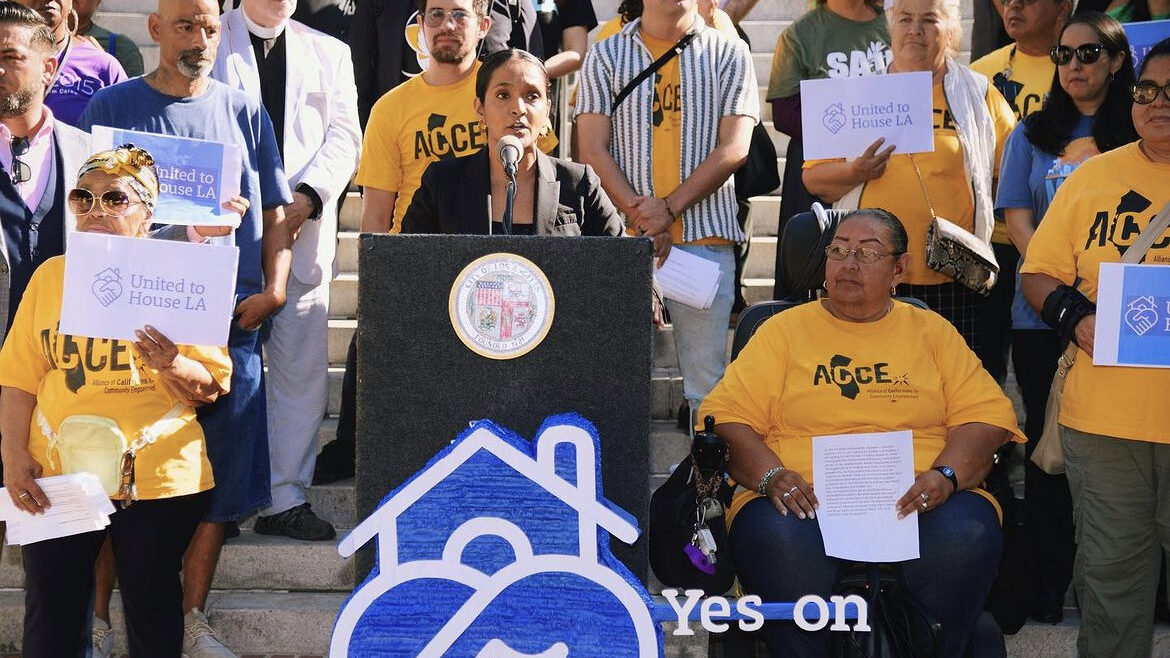
The Los Angeles City Council implemented the most extensive set of tenant protections in more than 40 years, following the Rent Stabilization Ordinance.
Tenants’ Right to Counsel (RTC)
Beginning August 20, 2025, landlords must provide a tenant with a Notice of Right to Counsel in the following instances:
- Provide a Notice of Right to Counsel at the beginning of a tenancy in the tenant’s primary language. Find other languages here.
- Attach a Notice of Right to Counsel to a copy of any eviction notice (served on the tenant.
- Attach a Notice of Right to Counsel to any notice of termination of a rental housing subsidy (e.g., Section 8).
- Attach a Notice of Right to Counsel to any rental housing subsidy administrative proceeding correspondence that may result in the termination of the tenant’s rental housing subsidy.
- Post the Notice of Right to Counsel in a conspicuous common area of the residential building where the tenant resides.
If you are a residential tenant and receive a Los Angeles Court document (Summons & Complaint- Unlawful Detainer (UD)), you may be eligible for legal services through the City’s Right to Counsel program in partnership with SHLA if you meet the following criteria:
- You live in the City of Los Angeles within the covered geography;
- Your household income is under 80% of the area median income;

- You do not reside in the same dwelling unit as the landlord; and
- You apply to SHLA within 30 days of receiving the UD (and not in default with the court) or within 30 days of receiving a Section 8 notice of termination.
*To avoid default being entered by the unlawful detainer (UD) court, you must file an answer with the court within 10 days of service of the unlawful detainer (eviction) complaint. Please visit Stay Housed LA’s website to receive legal help immediately after receiving a UD. *
You can find more information here.
Rent Increases
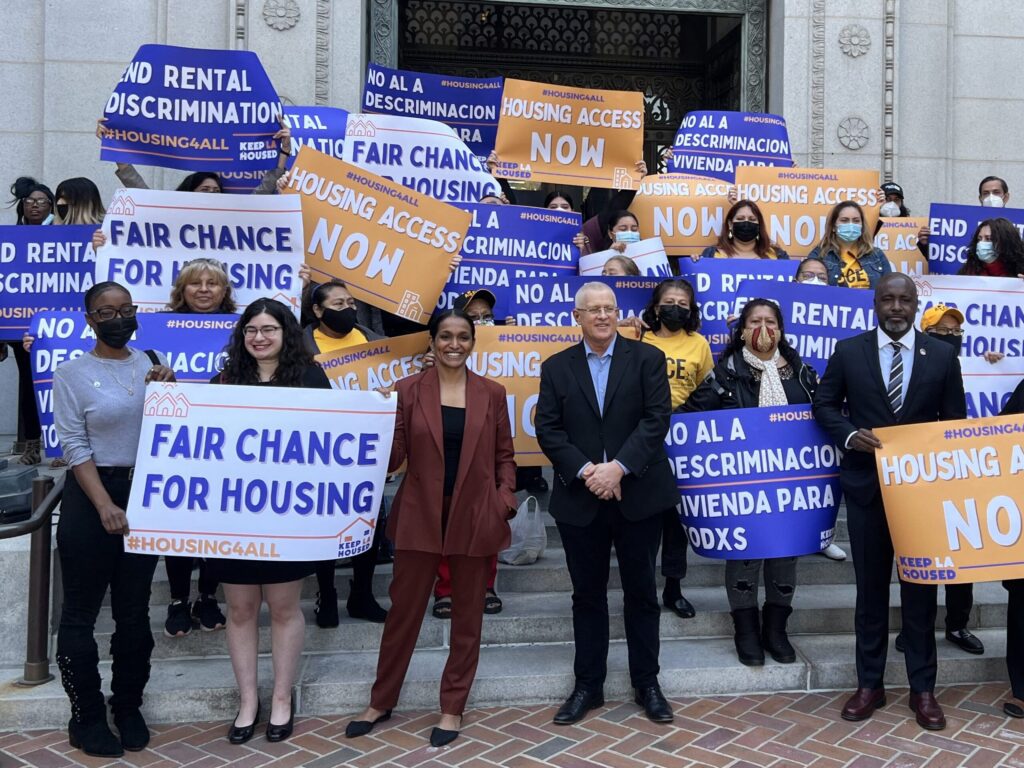
In the City of Los Angeles, rent increases vary depending on what type of unit you rent. Please see below to accurately determine what your allowable rent increase is.
If you are living in a Rent Stabilization Ordinance (RSO) unit:
- You CAN receive an allowable rent increase of up to 3% in a 12-month span, from July 1, 2025 to June 30, 2027.
- An additional 1% for gas and 1% for electricity can be added to the 4% if your landlord provides these services.
- Your landlord is required to give you a 30-day written notice.
- You CANNOT be evicted without a reason or just cause.
- Helpful Tip: to find out if you live in an RSO unit, click HERE!
If you are living in a non-RSO unit:
- You CAN receive a rent increase. If your unit is protected under State Law AB 1482, you cannot receive an increase of more than 8% of your current rent in a 12-month span, from August 1, 2025 to July 31, 2026.
- You CANNOT be evicted without a reason or just cause.
Universal Just Cause
*All* units in LA now officially have “just cause” protections, meaning a landlord cannot evict a tenant without declaring a cause from a designated list, which you can find HERE.
For non-RSO units, these protections take effect after six months or at the end of the first lease term, whichever comes first. If you have already been in your apartment for six months as of today, you are covered.
Landlords will be responsible for paying an annual Just Cause Enforcement Fee of $31.05 to the Los Angeles Housing Department (LAHD).
Terminate Tenancy/Eviction Filing Requirements
If you receive an “at-fault” eviction notice, your landlord must file with LAHD within three business days, including legal reasons for eviction.
For all no-fault evictions, landlords must file with LAHD, submit required fees, and pay the tenant relocation assistance.
Evictions for Non-Payment of Rent
City Council approved a minimum threshold for evictable rent debt, which means tenants who owe less than one month of rent CANNOT be evicted.
The threshold is one month Fair Market Rent – currently $2,328 for one-bedroom units and $2,903 for two-bedroom units in Los Angeles. Please refer to LAHD’s website for full information. For example: If a tenant rents a 1-bedroom unit and owes $1,500, the landlord cannot evict the tenant because the rent owed is less than the FMR for a 1-bedroom unit ($2,328).

Relocation Assistance
- Relocation Assistance is required for tenant no-fault evictions for all residential units.
- Relocation Assistance for tenants who rent a Single Family Dwelling (SFD) is one month’s rent if the landlord is a natural person who owns no more than 4 residential units and a SFD on a separate lot.
- A landlord can deduct a tenant’s unpaid rental debt from the relocation assistance payment.
- Low-income tenants displaced due to demolition for new construction may be entitled to higher relocation amounts.

Protections Notice
All landlords of residential properties must provide a Notice of Renters’ Protections to tenants who begin or renew their tenancy. This notice must also be posted in an accessible common area of the property.
Click HERE to download the Protections Notice.
Tenant Anti-Harassment Ordinance (TAHO)
On June 23, 2021, the Los Angeles City Council adopted the tenant anti-harassment ordinance which prohibits landlords from harassing tenants by actions such as removing housing services, withholding repairs or refusing to accept rent payments. The ordinance applies to ALL residential units in the City of Los Angeles. For more information, click here.
What To Do If You Are Experiencing Harassment From Your Landlord
Tenant harassment can take many forms, including refusal to complete required repairs, threatening physical harm, or asking about immigration status.
*To see a full list of what qualifies as renter harassment in the City of LA, click HERE.
Reach out to:
- The LA Housing Department who investigates harassment complaints for RSO units.
- Housing Rights Center investigates harassment complaints for non-RSO buildings.
- Connect with legal assistance such as Coalition for Economic Survival. Find a list of legal resources here.
- Contact your Council Office. Council District 4 residents can reach out to contactCD4@lacity.org or call (213) 473-7004.
STEPS TO TAKE IF YOU RECEIVE AN EVICTION NOTICE
1. DO NOT SELF-EVICT
Stay in your unit and reach out to the City immediately to help navigate what your options are.
2. Identify what kind of notice you received.
Here is a breakdown of common types of notices:
- 3-DAY NOTICE TO PAY OR QUIT: Do not self-evict. If you receive a 3-day notice you are not required to file an answer and should reach out to LAHD because landlords are required to file to the department. In order for the eviction process to be initiated after a 3-day notice, you will still need to receive a “Summons and Complaint – Unlawful Detainer (UD)”. Please be on the lookout for a UD, which does have a 10-day deadline to respond.
- UNLAWFUL DETAINER (UD): Do not self-evict. If you receive a “Summons and Complaint – Unlawful Detainer” you MUST file an answer within10 days. If you respond late you can automatically lose your case. Please be attentive to any deadlines.
- Please reach out to the Mayor’s LA Fund at 213-584-1808 for assistance in responding to the UD.
- ANY OTHER TYPE OF NOTICE: Please refer to LAHD resources. If you live in an RSO unit, file an RSO complaint in order to get an RSO investigator to review the case and to create a paper trail for the City. The State of California also has a helpful breakdown of these processes and explanations of different types of eviction notices.
*Reminder: If you don’t respond to formal notices such as “Summons and Complaint – Unlawful Detainer,” you can automatically lose your case. The court eviction process can take 30 days or longer, providing time to access additional resources available to you.
3. Reach out to the Mayor’s LA Fund hotline at 213-584-1808
- We Are LA, an initiative of the Mayor’s Fund for Los Angeles, is focused on preventing evictions and connecting families to resources that can help them stay in their homes.
- If you received a UD, call the Mayor’s LA Fund hotline for help 213-584-1808 or visit their website HERE .
- Please review their resources on what steps to take and refer to a list of other resources such as the Tenant Power Toolkit, Eviction Defense Network’s comprehensive video series, and workshops and clinics hosted by a variety of community-based organizations.
4. Contact your Council Office
If you have questions or concerns, please reach out to your council office as they can help assist you. Council District 4 residents can reach out to contactCD4@lacity.org or call (213) 473-7004 for assistance.
ADDITIONAL INFORMATION & RESOURCES
More information on the City’s Renter Protections:
Legal Resources for LA City Renters:
Help prevent Angelenos from falling into homelessness through outreach, case management and expanded legal services. Contact them by calling 213-584-1808.
Stay Housed LA is a partnership between the City of Los Angeles, Los Angeles County, and local community and legal service providers. The Stay Housed LA website explains current renter protections, hosts renter workshops, and refers renters facing eviction to legal service providers.
Neighborhood Legal Services Of Los Angeles County:
NLSLA offers free legal representation, advice and education to combat poverty in our community.
Los Angeles Housing Department Legal Resources:
List of agencies providing a variety of assistance on landlord/tenant issues, rent stabilization, code enforcement, housing matters, and evictions.
Los Angeles Tenants Union Locals:
The LA Tenants Union is a diverse, tenant-led movement. Locals organize against landlord harassment, mass evictions, and displacement.
Coalition for Economic Survival (CES) Renters’ Rights Clinics:
CES hosts weekly virtual clinics to advise on COVID protections, evictions, rent control, getting repairs, security deposits, and more.
The Tenant Power Toolkit is a collaborative effort between The Debt Collective, The LA Tenants Union, The Anti-Eviction Mapping Project, anti-eviction lawyers and legal service providers. The toolkit has a step by step on how to respond to an unlawful detainer and even submits it for you. The toolkit is designed to keep people in their homes, fight evictions, fight rent debt, and build the collective power of tenants.
California Courts Self-Help Guide:
The State offers a clear breakdown of the eviction process for tenants, including step-by-step guides for how to represent yourself in court
Eviction Defense Network Video Series:
Comprehensive series covering EDN’s Tenant Empowerment Program intended to prepare people for more in-depth webinars and resources.
File an RSO or Just Cause Eviction Protection Complaint:
Reasons for complaint may include the following:
- Unit not registered
- Illegal Eviction
- Non-Payment of Relocation Assistance
- Illegal Rent Increase
- Reduction of Services
- Failure to Post Notice
- Illegal Buyout Agreement
- Required Online Payment/Electronic Fund Transfer
- Harassment
- Issues such as discrimination, retaliation, habitability, or return of security deposits
Report a code violation:
Reasons for complaint may include the following:
- Leaking shower
- No hot water
- Broken countertop
- Flooding
- Issues regarding unsafe living conditions and code violations at multifamily rental properties
- Doesn’t need to be RSO or AB1482. Any apartment complex needs to file a complaint with LAHD (LADBS is responsible for investigating any complaints filed in condominiums)
*Please note: LADBS is responsible for investigating any complaints filed in condominiums and non-RSO buildings.